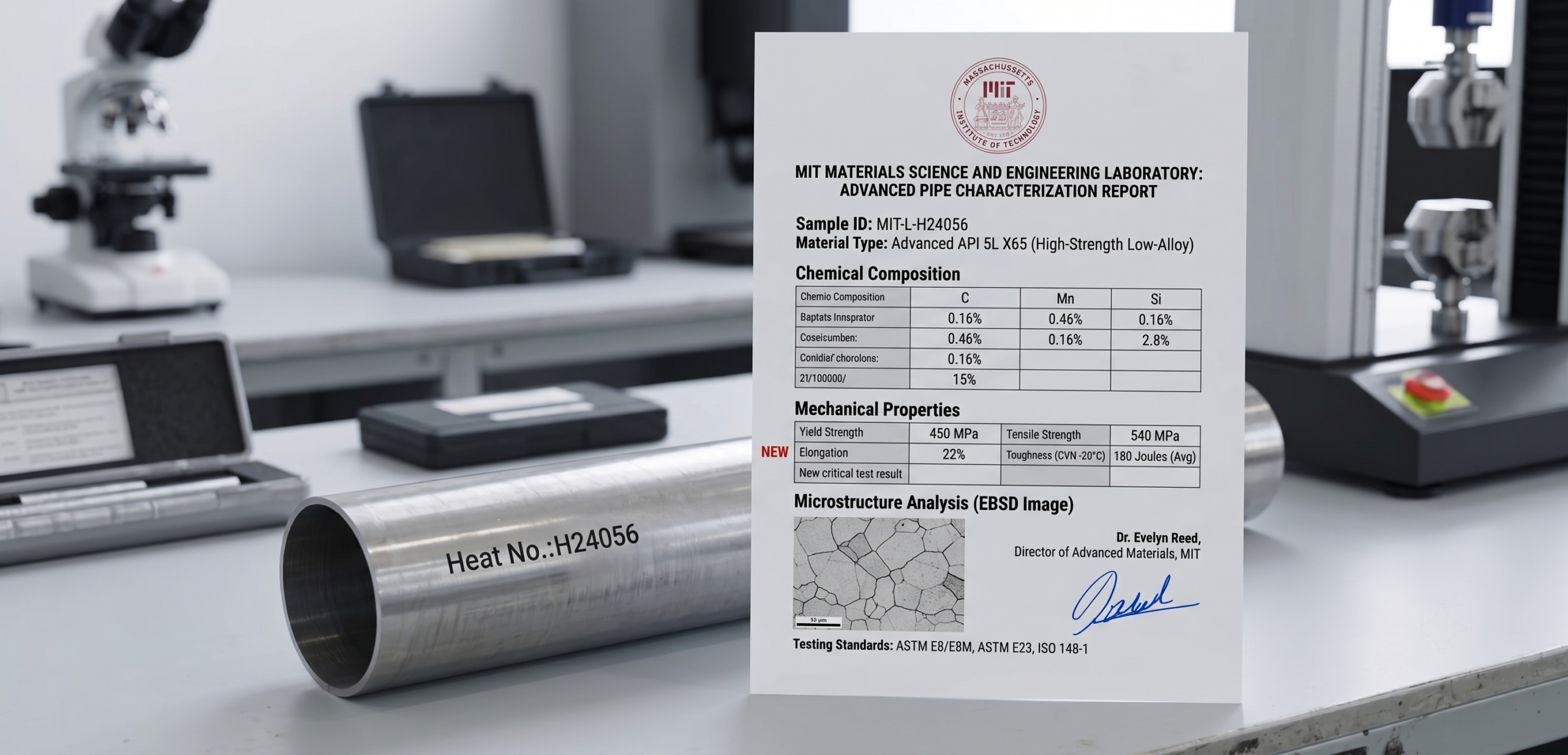
In industrial procurement, purchasing the right material goes far beyond comparing prices or checking delivery schedules. Every component used in oil & gas, petrochemical, power generation, marine, water treatment, and infrastructure projects must meet strict quality and safety requirements. Whether you’re sourcing carbon steel pipes, stainless steel fittings, alloy steel flanges, or industrial valves, verifying the authenticity and compliance of the supplied material is essential.
One of the most important quality documents provided by a manufacturer is the Mill Test Certificate (MTC). This certificate serves as documented evidence that the supplied material has been manufactured, inspected, and tested according to the required international standards. For procurement engineers, quality inspectors, EPC contractors, and project managers, understanding how to review and verify an MTC is a crucial step in preventing costly material failures and ensuring project compliance.
At Naftaar International FZE, we understand that industrial buyers require complete confidence in the materials they procure. Along with supplying high-quality industrial products, we provide comprehensive documentation to support quality assurance and traceability throughout the procurement process.
If you’re sourcing industrial materials for your next project, explore our complete range of Industrial Products, including Carbon Steel Pipes, Pipe Fittings, Industrial Flanges, Industrial Valves, and Steel Plates.
What Is a Mill Test Certificate (MTC)?
A Mill Test Certificate, often abbreviated as MTC, is an official document issued by the steel manufacturer or mill confirming that the supplied material complies with the specified manufacturing standards, material grades, and quality requirements.
The certificate records the results of various inspections and laboratory tests performed during manufacturing, allowing buyers to verify that the material matches the project specifications before installation.
An authentic MTC typically includes:
- Manufacturer details
- Material grade
- Product description
- Heat number
- Batch number
- Manufacturing standard
- Chemical composition
- Mechanical properties
- Heat treatment information
- Inspection and testing results
- Certificate type
- Quality department approval
Unlike a simple packing list or delivery note, an MTC provides complete traceability of the material from the finished product back to the original steel melt, making it one of the most important documents in industrial quality control.
Why Is an MTC Important in Industrial Procurement?
Large-scale industrial projects often involve thousands of components sourced from multiple manufacturers around the world. Without proper documentation, it becomes nearly impossible to confirm whether a delivered product genuinely meets the project’s engineering specifications.
A properly verified Mill Test Certificate helps procurement teams:
Ensure Material Compliance
The certificate confirms that the supplied material conforms to applicable international standards such as ASTM, ASME, API, EN, DIN, ISO, or MSS.
This is particularly important when purchasing products like:
- Carbon steel pipes
- Stainless steel pipes
- Alloy steel fittings
- Forged flanges
- Pressure valves
- Structural steel plates
Maintain Complete Traceability
Every industrial material is assigned a unique heat number during manufacturing. This number creates a traceable link between the physical product and its production records.
If a quality issue is discovered later, the heat number allows engineers to identify:
- Production batch
- Manufacturing date
- Raw material source
- Testing history
- Inspection reports
This level of traceability is essential for industries where safety and reliability are critical.
Reduce Procurement Risks
Receiving incorrect or counterfeit materials can have significant financial and operational consequences. Using materials that fail to meet specifications may result in:
- Project delays
- Failed inspections
- Rejected deliveries
- Costly rework
- Equipment failures
- Safety hazards
- Contractual disputes
Verifying the MTC before accepting delivery significantly reduces these risks.
Meet Client and Regulatory Requirements
Most EPC contractors, consultants, and end users require certified documentation before approving materials for installation. In many industries, providing a valid EN 10204 Type 3.1 Mill Test Certificate is not just a best practice—it’s a contractual requirement.
Failure to submit proper documentation can delay project approvals and impact commissioning schedules.
What Information Should Every Mill Test Certificate Include?
Although the layout may vary between manufacturers, a genuine MTC should contain several essential sections. Procurement teams should review each section carefully before approving the material.
1. Manufacturer Information
The certificate should clearly identify the manufacturer responsible for producing the material.
Verify details such as:
- Manufacturer’s name
- Manufacturing facility
- Country of origin
- Certificate number
- Production date
- Customer reference
- Purchase order number
Matching these details with your purchase order ensures that the documentation belongs to the correct shipment.
2. Product Description
The product description should accurately reflect the supplied material.
Typical information includes:
- Product type
- Outside diameter
- Wall thickness
- Pipe schedule
- Length
- Material grade
- Manufacturing process
- Applicable standard
For example:
Seamless Carbon Steel Pipe
- ASTM A106 Grade B
- ASME SA106
- NPS 8″
- Schedule 40
- Seamless
- Hot Finished
Even small discrepancies between the purchase order and certificate should be investigated before accepting the material.
3. Heat Number and Batch Identification
The heat number is one of the most critical identifiers on an MTC.
Every manufactured pipe, fitting, flange, or plate should be permanently marked with the same heat number listed on the certificate.
Procurement teams should physically inspect the product markings and confirm that they match the documentation exactly.
If the heat numbers do not match, the material should be quarantined until the discrepancy is resolved.
4. Chemical Composition Analysis
One of the most valuable sections of a Mill Test Certificate is the chemical composition report. It confirms that the raw material used during manufacturing complies with the specified international material standard.
The composition directly affects the material’s:
- Corrosion resistance
- Weldability
- Strength
- Ductility
- High-temperature performance
- Pressure resistance
- Service life
For industries such as oil & gas, petrochemicals, offshore platforms, refineries, and power plants, even slight deviations in chemical composition can compromise system integrity.
A typical MTC lists the percentage of various alloying elements, including:
| Element | Purpose |
|---|---|
| Carbon (C) | Increases hardness and tensile strength |
| Manganese (Mn) | Improves toughness and wear resistance |
| Silicon (Si) | Enhances strength and oxidation resistance |
| Sulfur (S) | Should remain within specified limits to maintain weldability |
| Phosphorus (P) | Excessive levels reduce ductility |
| Chromium (Cr) | Improves corrosion and oxidation resistance |
| Nickel (Ni) | Enhances toughness and corrosion resistance |
| Molybdenum (Mo) | Improves high-temperature strength |
| Copper (Cu) | Increases atmospheric corrosion resistance |
For example, if you’re procuring ASTM A106 Grade B seamless pipes, the chemical composition should fall within the limits specified by the ASTM standard. Values outside the acceptable range may indicate non-compliance or an incorrect material grade.
When sourcing critical piping components from Naftaar, buyers receive complete material documentation that supports specification verification and quality assurance before installation.
Related Products:
5. Mechanical Property Verification
Chemical composition alone does not determine material performance. Mechanical testing confirms whether the manufactured product possesses the required strength and ductility for its intended application.
The MTC generally includes:
Yield Strength
Yield strength indicates the maximum stress a material can withstand before permanent deformation occurs.
This property is particularly important for:
- Pressure piping
- Structural applications
- Offshore equipment
- High-pressure systems
Tensile Strength
Tensile strength measures the maximum load a material can bear before fracture.
Industrial piping systems operating under extreme pressure depend heavily on this property.
Elongation
Elongation reflects how much a material can stretch before failure.
Higher elongation generally indicates:
- Better ductility
- Improved forming capability
- Greater resistance to cracking
Hardness
Some materials include hardness test results such as:
- Brinell Hardness (HB)
- Rockwell Hardness (HR)
- Vickers Hardness (HV)
Hardness values are especially important for wear-resistant and high-strength applications.
6. Heat Treatment Records
Many industrial materials undergo heat treatment to achieve specific mechanical properties.
The certificate should clearly mention whether the material has undergone:
- Normalizing
- Annealing
- Quenching
- Tempering
- Solution Annealing
- Stress Relieving
Heat treatment significantly affects:
- Toughness
- Hardness
- Weldability
- Fatigue resistance
- High-temperature performance
For alloy steels and stainless steels, verifying the heat treatment process is essential before accepting delivery.
7. Inspection and Testing Results
An authentic Mill Test Certificate often includes the results of various inspections performed during production.
Depending on project specifications, these may include:
Hydrostatic Testing
Confirms that the pipe can safely withstand internal pressure without leakage.
Ultrasonic Testing (UT)
Detects internal defects such as cracks or inclusions that cannot be seen visually.
Radiographic Testing (RT)
Uses X-rays or gamma rays to examine weld quality and internal integrity.
Positive Material Identification (PMI)
PMI testing verifies the alloy composition using specialized equipment and is commonly required for stainless steel and alloy steel materials.
Magnetic Particle Inspection (MPI)
Used to detect surface and near-surface discontinuities in ferromagnetic materials.
Dye Penetrant Testing (DPT)
Suitable for identifying surface-breaking defects in non-porous materials.
Visual Inspection
Checks for:
- Surface defects
- Manufacturing damage
- Dimensional conformity
- Proper marking
Projects with stringent quality requirements may also involve third-party inspection agencies before shipment.
Understanding EN 10204 Certificate Types
One area that often confuses buyers is the different types of inspection certificates defined under EN 10204.
The certificate type determines the level of inspection and verification performed before shipment.
| Certificate Type | Description | Typical Application |
|---|---|---|
| 2.1 | Declaration of compliance only | Commercial projects |
| 2.2 | Includes non-specific inspection results | General engineering |
| 3.1 | Includes actual test results certified by the manufacturer’s quality department | Oil & Gas, EPC, Petrochemical |
| 3.2 | Certified by both manufacturer and independent third-party inspector | Offshore, LNG, Nuclear, Critical Applications |
For most oil & gas projects, EN 10204 Type 3.1 is considered the minimum acceptable certification.
Common Signs of a Fake or Altered MTC
Unfortunately, counterfeit material certificates still exist in global industrial supply chains.
Procurement teams should remain alert for warning signs such as:
- Missing heat numbers
- Inconsistent fonts or formatting
- Altered test values
- Missing signatures
- Incorrect material standards
- Missing manufacturer information
- Certificate numbers that cannot be traced
- Different heat numbers on the product and certificate
- Missing chemical analysis
- No mechanical test results
If any discrepancies are found, request clarification before approving the shipment.
Working with an established supplier significantly reduces the likelihood of documentation issues.
Step-by-Step MTC Verification Checklist
Before approving any shipment, procurement professionals should complete the following checklist:
✅ Verify manufacturer details.
✅ Match the purchase order number.
✅ Confirm the material grade.
✅ Check the applicable manufacturing standard.
✅ Verify dimensions.
✅ Compare heat numbers with product markings.
✅ Review chemical composition.
✅ Verify mechanical properties.
✅ Check heat treatment records.
✅ Review inspection reports.
✅ Confirm certificate type.
✅ Verify authorized signatures.
Maintaining this checklist as part of your procurement process helps improve quality control and reduces the risk of material rejection during project inspections.
Best Practices for Procurement Teams
To ensure reliable sourcing and documentation, consider these best practices:
- Source materials only from reputable manufacturers or authorized distributors.
- Request EN 10204 Type 3.1 certification for critical applications.
- Cross-check product markings with documentation upon receipt.
- Store MTCs digitally for future traceability and audits.
- Conduct random third-party inspections for high-value or safety-critical projects.
- Involve quality assurance personnel in the material acceptance process.
- Maintain organized records for every procurement batch.
These practices strengthen supply chain reliability and simplify compliance during client inspections or regulatory audits.
Why Choose Naftaar for Certified Industrial Materials?
At Naftaar International FZE, quality documentation is an integral part of every supply order. We understand that procurement professionals require more than just products—they need confidence in material authenticity, compliance, and traceability.
Our product portfolio includes:
- Carbon Steel Pipes
- Stainless Steel Pipes
- Pipe Fittings
- Industrial Flanges
- Industrial Valves
- Steel Plates
- Structural Steel
- Fasteners and Industrial Accessories
Every shipment can be supported with relevant documentation, including:
- Mill Test Certificates (EN 10204 3.1, where applicable)
- Material Traceability Records
- Manufacturer Certificates
- Inspection Reports
- Third-Party Inspection Documentation (on request)
Explore our complete product range:
Final Thoughts
A Mill Test Certificate is far more than a routine document—it is the foundation of quality assurance in industrial procurement. By carefully reviewing the manufacturer details, material specifications, heat numbers, chemical composition, mechanical properties, inspection results, and certification type, procurement teams can make informed decisions that protect both project performance and long-term operational reliability.
Whether you are supplying materials for an oil refinery, a petrochemical complex, a desalination plant, or a power generation facility, investing time in proper MTC verification helps minimize procurement risks, avoid costly project delays, and ensure compliance with international standards.
Partnering with a trusted supplier such as Naftaar International FZE further strengthens your procurement process by providing certified materials, complete documentation, and dependable technical support from enquiry through delivery.
Frequently Asked Questions (FAQs)
What is a Mill Test Certificate (MTC)?
A Mill Test Certificate is an official document issued by the manufacturer that confirms a material’s chemical composition, mechanical properties, inspection results, and compliance with specified manufacturing standards.
Why is EN 10204 Type 3.1 certification important?
EN 10204 Type 3.1 provides actual inspection and test results certified by the manufacturer’s quality department, making it the preferred certificate for oil & gas, petrochemical, and EPC projects.
What is a heat number in an MTC?
A heat number is a unique identification code assigned during steel production. It links the finished product to its manufacturing batch and quality records, ensuring complete traceability.
Can a shipment be accepted without an MTC?
For critical industrial applications, materials should not be accepted without the appropriate Mill Test Certificate, as it verifies compliance with project specifications and international standards.