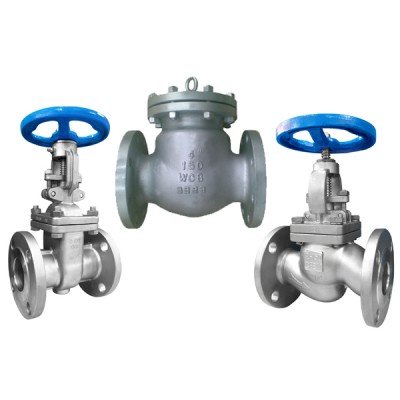
Industrial valves are among the most critical components in every piping system, whether it’s an offshore oil platform, refinery, petrochemical plant, water treatment facility, or power generation station. These devices regulate, direct, and control the flow of liquids, gases, steam, and other process media, ensuring that industrial operations remain safe, efficient, and compliant with international standards.
Selecting the right valve goes far beyond choosing a product that simply opens or closes. Every application demands careful consideration of operating pressure, temperature, fluid characteristics, corrosion resistance, maintenance requirements, and industry-specific regulations. A poor valve selection can result in unplanned shutdowns, leakage, increased maintenance costs, environmental risks, and even safety hazards.
As industrial projects become more complex, procurement engineers, EPC contractors, and maintenance teams need a comprehensive understanding of valve types, materials, and performance characteristics before making purchasing decisions.
In this guide, we’ll explore the most commonly used industrial valves, their applications across the oil and gas sector, and the key factors to consider before buying industrial valves. You’ll also learn how partnering with a reliable supplier like Naftaar can help ensure product quality, compliance, and timely delivery for your projects.
Featured Snippet: What Are Industrial Valves?
Industrial valves are mechanical devices used to regulate, start, stop, or direct the flow of liquids, gases, steam, and other fluids within a piping system. They are widely used in oil & gas, petrochemical, power generation, water treatment, mining, and manufacturing industries to ensure safe, efficient, and controlled process operations.
Why Industrial Valves Are Essential in Oil & Gas Projects
The oil and gas industry operates under some of the world’s harshest conditions. High temperatures, extreme pressures, corrosive chemicals, abrasive slurries, and hazardous gases demand equipment that performs reliably under continuous operation.
Industrial valves serve as the first line of defense in controlling these demanding processes. They help maintain operational safety, prevent product contamination, isolate equipment during maintenance, regulate flow rates, and protect expensive infrastructure from pressure fluctuations.
From upstream exploration and drilling to midstream transportation and downstream refining, virtually every stage of an oil and gas project relies on specialized valves to ensure smooth operation.
Some of the primary functions of industrial valves include:
- Controlling fluid flow
- Isolating process equipment
- Preventing backflow
- Regulating pressure
- Maintaining system safety
- Controlling temperature-sensitive processes
- Managing emergency shutdown systems
- Supporting automated industrial operations
Without properly selected valves, industrial facilities risk costly downtime, equipment damage, and safety incidents.
Industries That Depend on Industrial Valves
Although valves are heavily associated with the oil and gas industry, they are equally essential across numerous industrial sectors.
These include:
- Oil & Gas Exploration
- Petrochemical Plants
- Chemical Processing
- LNG Facilities
- Power Generation
- Water & Wastewater Treatment
- Marine & Offshore Industries
- Mining Operations
- Pharmaceutical Manufacturing
- Food & Beverage Processing
- HVAC Systems
- Pulp & Paper Industries
- Fertilizer Plants
- Steel Manufacturing
Each industry requires valves designed to meet specific operational challenges and international standards.
Different Types of Industrial Valves
Choosing the right valve starts with understanding how each type functions. Different valves are engineered for different purposes, making it essential to match the valve design with the application’s operational requirements.
Below are the most commonly used industrial valves in oil and gas facilities.
1. Gate Valve
A gate valve is primarily used for fully opening or completely shutting off fluid flow. Unlike regulating valves, gate valves are not intended for throttling because partial opening can cause excessive wear on the valve seat.
Key Features:
- Full bore design
- Minimal pressure drop
- Excellent sealing capability
- Suitable for bidirectional flow
- Ideal for high-pressure systems
Common Applications:
- Crude oil pipelines
- Refineries
- LNG terminals
- Offshore platforms
- Water transmission systems
Advantages:
- Low flow resistance
- Long service life
- Excellent shut-off performance
- Suitable for large diameter pipelines
2. Globe Valve
Globe valves are specifically designed for flow regulation and throttling. Their internal disc movement allows operators to precisely control flow rates, making them ideal for applications requiring accurate process control.
Key Features:
- Excellent throttling capability
- Precise flow regulation
- Good sealing performance
- Easy maintenance
Common Applications:
- Steam systems
- Cooling water lines
- Chemical processing
- Fuel distribution
- Boiler feedwater systems
Advantages:
- Superior flow control
- Reliable sealing
- High durability
- Suitable for frequent operation
3. Ball Valve
Ball valves have become one of the most widely used valve types in industrial applications due to their simple design, fast operation, and excellent sealing performance.
A quarter-turn rotating ball controls the flow, allowing quick opening and closing with minimal effort.
Key Features:
- Quarter-turn operation
- Bubble-tight shutoff
- Compact design
- Low maintenance
- High reliability
Common Applications:
- Natural gas pipelines
- Petrochemical plants
- Offshore production
- LNG processing
- Hydraulic systems
Advantages:
- Fast operation
- Excellent sealing
- Long service life
- Low maintenance costs
- Suitable for automation
4. Butterfly Valve
Butterfly valves use a rotating disc positioned within the pipeline to regulate fluid flow. Their lightweight construction and cost-effectiveness make them particularly suitable for large-diameter piping systems.
Key Features:
- Compact design
- Lightweight
- Quarter-turn operation
- Cost-effective
- Easy installation
Common Applications:
- Water treatment plants
- Cooling water systems
- Fire protection systems
- Chemical plants
- HVAC installations
Advantages:
- Lower installation costs
- Compact dimensions
- Quick operation
- Ideal for large pipelines
5. Check Valve
Unlike manually operated valves, check valves function automatically to prevent reverse flow within a piping system.
They protect pumps, compressors, and other expensive equipment from damage caused by backflow.
Key Features:
- Automatic operation
- Prevents reverse flow
- Low maintenance
- Reliable protection
Common Applications:
- Pump discharge lines
- Water systems
- Oil transportation
- Gas pipelines
- Process industries
Advantages:
- Protects equipment
- Prevents contamination
- Reduces maintenance
- Improves system safety
Comparison of Common Industrial Valves
| Valve Type | Primary Function | Best For | Pressure Rating | Automation Friendly |
|---|---|---|---|---|
| Gate Valve | On/Off Isolation | Pipelines | High | Yes |
| Globe Valve | Flow Regulation | Steam & Process Control | High | Yes |
| Ball Valve | Quick Shutoff | Oil & Gas | High | Excellent |
| Butterfly Valve | Flow Control | Large Pipelines | Medium | Excellent |
| Check Valve | Prevent Backflow | Pump Protection | High | Automatic |
Why Choosing a Trusted Industrial Valve Supplier Matters
The performance of an industrial valve depends not only on its design but also on the reliability of the supplier behind it. A trusted supplier ensures that every valve meets stringent quality standards, complies with international specifications, and is suitable for the intended operating conditions.
At Naftaar, we connect industrial buyers with high-quality valve solutions for the oil & gas, petrochemical, power, marine, and infrastructure sectors. Our extensive sourcing network covers a wide range of valve types, pressure classes, materials, and international standards, helping EPC contractors and procurement teams source dependable products from trusted manufacturers.
Whether your project requires gate valves, globe valves, ball valves, butterfly valves, check valves, or specialised valve solutions, Naftaar is committed to delivering quality products, technical support, and reliable supply chain services tailored to your project requirements.
6. Plug Valve
Plug valves are quarter-turn valves that use a cylindrical or tapered plug with a passage through its center to control fluid flow. Due to their simple design and reliable sealing performance, plug valves are widely used in applications requiring quick shutoff and minimal pressure drop.
They are particularly effective in systems handling corrosive chemicals, hydrocarbons, and slurry because they offer excellent resistance to contamination and are easy to operate.
Key Features:
- Quarter-turn operation
- Compact construction
- Excellent leak-tight sealing
- Low pressure loss
- Suitable for frequent operation
Common Applications:
- Oil & gas production facilities
- Petrochemical plants
- Fuel distribution systems
- Chemical processing industries
- Refinery operations
Advantages:
- Fast opening and closing
- Minimal maintenance
- High reliability
- Suitable for automated systems
- Long operational lifespan
7. Needle Valve
Needle valves are designed for precise flow regulation where small adjustments can significantly impact system performance. Their long, tapered needle-shaped stem allows operators to control flow with exceptional accuracy.
These valves are commonly found in instrumentation systems, laboratory applications, hydraulic equipment, and pressure measurement installations.
Key Features:
- Extremely accurate flow control
- Fine adjustment capability
- Compact design
- High-pressure compatibility
Common Applications:
- Instrumentation tubing
- Hydraulic systems
- Gas sampling
- Pressure gauges
- Laboratory equipment
Advantages:
- Exceptional precision
- Reliable sealing
- Suitable for high-pressure service
- Excellent for low-flow applications
8. Diaphragm Valve
Diaphragm valves use a flexible diaphragm instead of a metal disc to regulate flow. This unique design isolates the process fluid from the valve’s internal moving parts, making it ideal for handling corrosive, abrasive, or hygienic media.
These valves are commonly used in industries where contamination must be minimized, such as pharmaceuticals, food processing, and chemical manufacturing.
Key Features:
- Leak-free operation
- Excellent corrosion resistance
- Minimal maintenance
- Hygienic design
Common Applications:
- Chemical processing
- Water treatment plants
- Pharmaceutical manufacturing
- Food & beverage production
- Wastewater systems
Advantages:
- Prevents contamination
- Excellent chemical resistance
- Reduced maintenance
- Easy cleaning
9. Pressure Relief Valve (Safety Valve)
Pressure relief valves are among the most important safety devices in industrial facilities. They automatically release excess pressure whenever system pressure exceeds the predetermined safe operating limit.
Without properly functioning safety valves, pipelines, pressure vessels, boilers, and processing equipment can experience catastrophic failure.
Key Features:
- Automatic pressure protection
- Self-resetting operation
- Highly reliable
- Compliance with safety regulations
Common Applications:
- Boilers
- Pressure vessels
- Gas compressors
- Refineries
- LNG terminals
- Storage tanks
Advantages:
- Protects equipment
- Prevents explosions
- Improves workplace safety
- Meets industry regulations
10. Control Valve
Control valves are designed to automatically regulate process variables such as pressure, flow rate, temperature, and liquid level. Unlike manual valves, they operate using electric, pneumatic, or hydraulic actuators integrated with plant automation systems.
Control valves play a critical role in Industry 4.0 and modern smart manufacturing environments.
Key Features:
- Automatic operation
- High precision
- Supports remote monitoring
- Compatible with SCADA and DCS systems
Common Applications:
- Oil refineries
- LNG plants
- Petrochemical facilities
- Power plants
- Water treatment systems
Advantages:
- Improves process efficiency
- Reduces human intervention
- Enhances plant automation
- Lowers operational costs
Common Materials Used for Industrial Valves
Selecting the right valve material is just as important as selecting the correct valve type. Material compatibility directly affects corrosion resistance, pressure handling, service life, and overall operational reliability.
Below are some of the most commonly used materials in industrial valve manufacturing.
| Material | Properties | Typical Applications |
|---|---|---|
| Carbon Steel | High strength, economical | Oil & Gas, Power Plants |
| Stainless Steel | Excellent corrosion resistance | Chemical & Food Industries |
| Duplex Stainless Steel | High strength & chloride resistance | Offshore Platforms |
| Super Duplex | Extreme corrosion resistance | Marine & Seawater Systems |
| Bronze / Brass | Good corrosion resistance | Water Distribution |
| Alloy Steel | High-temperature service | Power Generation |
International Standards for Industrial Valves
Industrial valves must comply with internationally recognized standards to ensure consistent quality, safety, and performance. These standards define requirements for design, testing, pressure ratings, materials, dimensions, and inspection procedures.
Some of the most widely accepted valve standards include:
API (American Petroleum Institute)
API standards are extensively used in upstream, midstream, and downstream oil & gas projects.
Examples include:
– API 6D – Pipeline Valves
– API 600 – Steel Gate Valves
– API 602 – Compact Steel Gate, Globe & Check Valves
– API 608 – Metal Ball Valves
– API 609 – Butterfly Valves
ASME (American Society of Mechanical Engineers)
ASME standards govern pressure-temperature ratings, dimensions, and design requirements.
Popular standards include:
– ASME B16.34
– ASME B16.10
– ASME B16.5
– ASME B16.47
ASTM (American Society for Testing and Materials)
ASTM standards specify material compositions and mechanical properties for valve bodies, trims, stems, and associated piping components.
Examples include:
– ASTM A105
– ASTM A216 WCB
– ASTM A351 CF8M
– ASTM A182 F316
– ASTM A352 LCB
ISO Standards
ISO standards focus on quality management, manufacturing processes, testing procedures, and environmental compliance.
Many international EPC contractors require ISO-certified manufacturing facilities before approving suppliers.
Top 10 Factors to Consider Before Buying Industrial Valves
Purchasing an industrial valve should never be based on price alone. The correct valve selection improves plant efficiency, minimizes maintenance costs, and reduces operational risks.
Here are the most important considerations before placing an order.
1. Application Requirements
Start by understanding the specific application.
Ask questions such as:
– Is the valve intended for isolation or flow control?
– Will it regulate pressure?
– Does it need automatic operation?
– Is emergency shutoff required?
Different applications require different valve designs.
2. Operating Pressure and Temperature
Every valve has maximum pressure and temperature limits.
Selecting an undersized valve can lead to:
– Leakage
– Premature failure
– Safety hazards
– Equipment damage
Always verify the pressure class (Class 150, 300, 600, 900, 1500, etc.) and temperature rating before procurement.
3. Fluid Characteristics
The type of media flowing through the pipeline significantly affects valve selection.
Consider:
– Corrosive chemicals
– Crude oil
– Natural gas
– Steam
– Abrasive slurry
– Seawater
– LNG
– High-viscosity liquids
Material compatibility is essential for long-term reliability.
4. Valve Material
The body, trim, stem, and seat materials should be compatible with the operating environment.
Choosing the wrong material may result in:
– Corrosion
– Erosion
– Cracking
– Reduced service life
– Higher maintenance costs
5. End Connection Type
Industrial valves are available with different end connections, including:
– Flanged
– Butt Weld
– Socket Weld
– Threaded
– Grooved
The correct connection depends on pipeline design, operating pressure, and maintenance requirements.
Selecting the right industrial valve is only part of the procurement process. Equally important is sourcing products from a supplier that understands industry standards, project specifications, and delivery timelines.
Naftaar partners with trusted manufacturers and global supply networks to provide high-quality industrial valves for oil & gas, petrochemical, power generation, marine, and infrastructure projects. Whether you need standard isolation valves or specialized solutions for demanding environments, Naftaar offers access to products that meet internationally recognized standards and project requirements.
6. Compliance with International Standards
Industrial valves should always comply with recognised international standards to ensure safety, durability, and compatibility with your project specifications.
Before purchasing, verify whether the valve complies with standards such as:
API
ASME
ASTM
ISO
MSS
NACE (for sour service applications)
Compliance with these standards ensures the valve has been manufactured, tested, and inspected according to globally accepted engineering practices. It also simplifies project approvals and supports long-term operational reliability.
7. Automation Compatibility
Modern industrial facilities increasingly rely on automation to improve operational efficiency and reduce manual intervention. When selecting valves, consider whether they need to integrate with:
Pneumatic actuators
Electric actuators
Hydraulic actuators
PLC systems
SCADA systems
Distributed Control Systems (DCS)
Automation-compatible valves help optimize production, improve process accuracy, and enable remote monitoring and control.
8. Maintenance Requirements
Every industrial valve requires routine inspection and maintenance to ensure optimal performance throughout its service life.
Before purchasing, consider:
Ease of maintenance
Availability of spare parts
Accessibility after installation
Service intervals
Expected operational lifespan
Valves designed for easy maintenance can significantly reduce plant downtime and lower total ownership costs.
9. Supplier Reliability and Technical Support
A dependable supplier provides more than just products. They also offer technical expertise, product documentation, responsive customer support, and dependable delivery schedules.
When evaluating suppliers, consider:
Industry experience
Product portfolio
Compliance certifications
Traceability documentation
Inspection and testing capabilities
Delivery performance
After-sales support
Ability to source specialized valves
Working with an experienced supplier minimizes procurement risks and ensures that your project receives products aligned with technical specifications and delivery timelines.
10. Total Cost of Ownership
While the initial purchase price is an important consideration, it should not be the sole deciding factor. A lower-cost valve may lead to higher expenses over its lifecycle due to maintenance, repairs, downtime, or early replacement.
Evaluate the total cost of ownership by considering:
Purchase price
Installation costs
Maintenance expenses
Energy efficiency
Spare part availability
Expected service life
Operational reliability
Investing in high-quality valves often results in better long-term value and reduced operational risks.
Why Choose Naftaar as Your Industrial Valve Supplier?
Industrial projects demand reliable products, timely deliveries, and dependable technical support. At Naftaar, we connect businesses with trusted manufacturers and supply partners to deliver industrial valves that meet the performance requirements of oil & gas, petrochemical, marine, power generation, infrastructure, and water treatment projects.
Our product portfolio includes:
Gate Valves
Globe Valves
Ball Valves
Butterfly Valves
Check Valves
Plug Valves
Needle Valves
Pressure Relief Valves
Control Valves
Custom valve solutions for specialized applications
In addition to valves, Naftaar supplies a comprehensive range of industrial piping products, helping procurement teams streamline sourcing through a single trusted partner.
Why Customers Choose Naftaar
Extensive network of trusted manufacturers
High-quality industrial products
Compliance with international standards
Competitive pricing
Efficient global sourcing
Technical procurement support
Timely delivery
Solutions tailored to project requirements
Whether you’re supporting a refinery expansion, offshore platform, power plant, or industrial processing facility, Naftaar is committed to helping you source dependable valve solutions with confidence.
Related Products Available at Naftaar
To simplify procurement and ensure compatibility across your piping system, explore Naftaar’s range of industrial products:
Industrial Valves
Steel Pipes
Pipe Fittings
Pipe Flanges
Fasteners
Gaskets
Structural Steel Products
Industrial Equipment
Instrumentation Components
Conclusion
Industrial valves are indispensable components in modern piping systems, playing a vital role in controlling flow, maintaining pressure, protecting equipment, and ensuring safe operations across industries. From gate valves and globe valves to advanced control and pressure relief valves, each type is engineered for specific applications and operating conditions.
Selecting the right valve requires careful evaluation of process requirements, operating pressure, temperature, material compatibility, international standards, automation needs, and long-term maintenance considerations. A thoughtful procurement approach helps reduce downtime, improve system reliability, and maximize the return on investment.
Partnering with a trusted supplier further strengthens project success by ensuring access to quality products, technical guidance, and dependable supply chain support.
If you’re planning your next industrial project, explore Naftaar’s range of industrial valves and piping solutions to find products that align with your technical specifications and procurement objectives.