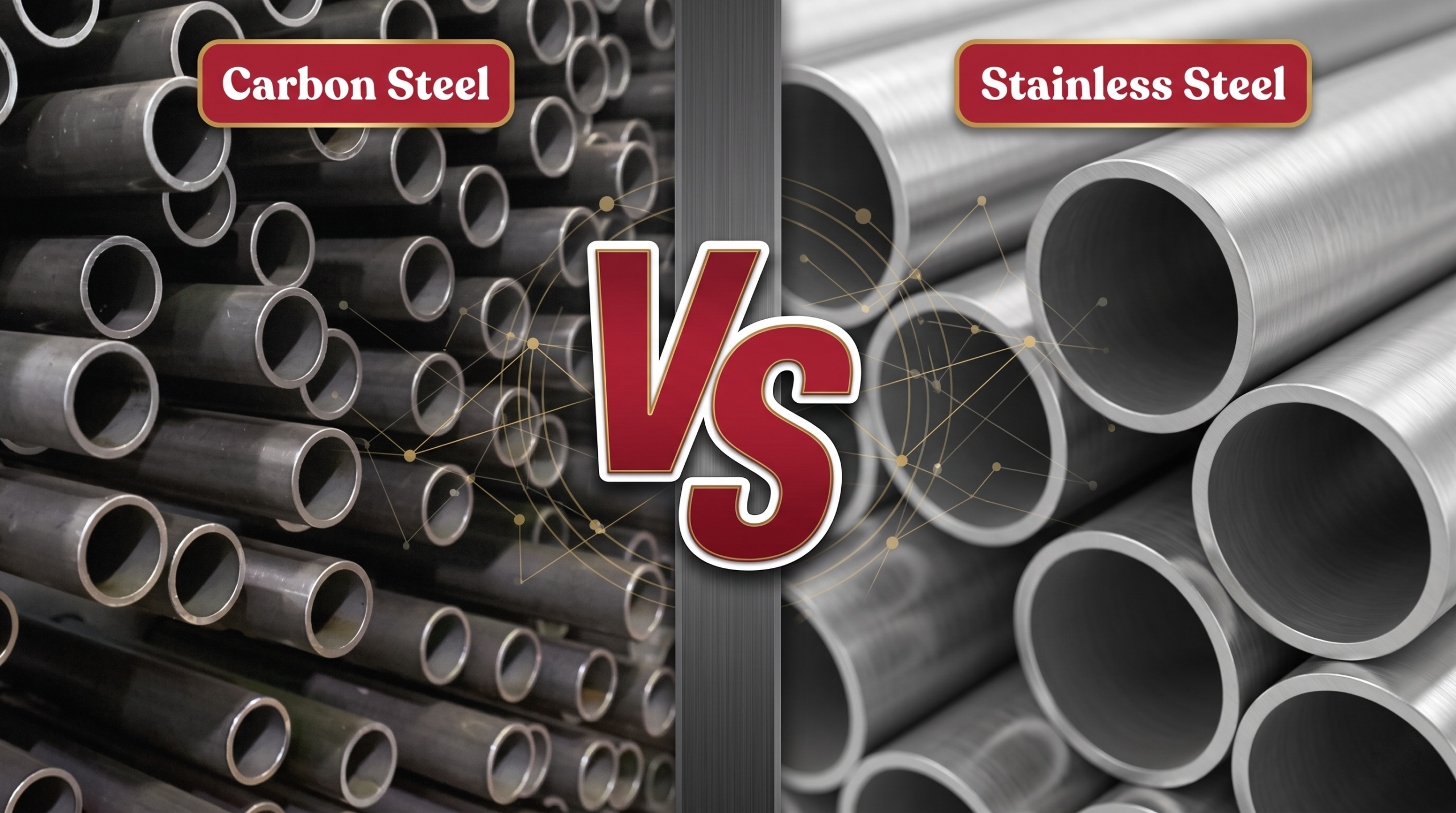
Choosing the wrong pipe material for an oil & gas project can cost thousands in early corrosion failures, shutdowns, or regulatory non-compliance. Here is a clear comparison to help you specify correctly.
In the UAE’s diverse industrial landscape — from desert refineries to offshore platforms and coastal processing plants — selecting between carbon steel pipe vs stainless steel pipe is one of the most important procurement decisions. This guide from Naftaar International FZE breaks down the key differences to help engineers and buyers make informed choices.
What is Carbon Steel Pipe?
Carbon steel pipes are made primarily from iron and carbon, with small amounts of manganese, silicon, and other elements. They are the workhorse of the piping industry due to their affordability and mechanical strength.
Common Grades:
– ASTM A106 Gr. B: Seamless carbon steel for high-temperature service
– ASTM A53: Welded and seamless for general use
– API 5L Gr. B, X52, X60: Line pipe for oil & gas transportation
Typical Schedules: Sch 40, 80, STD, XS, XXS
Strengths:
– Excellent tensile and yield strength
– Good weldability
– Wide availability in large diameters
– Cost-effective for non-corrosive or sweet service
Limitations:
– Poor corrosion resistance (requires coating, painting, or cathodic protection)
– Susceptible to rust in humid or coastal environments
– Limited temperature range for certain services
Carbon steel remains the most used material in UAE onshore pipelines and structural applications where the fluid is non-corrosive.
What is Stainless Steel Pipe?
Stainless steel pipes contain a minimum of 10.5% chromium, which forms a passive oxide layer providing outstanding corrosion resistance. They are ideal for aggressive environments.
Popular Grades:
– 304/304L: General purpose stainless
– 316/316L: Superior pitting and crevice corrosion resistance due to molybdenum
– 317L: Enhanced acid resistance
Strengths:
– Exceptional corrosion resistance in chloride, acidic, and marine environments
– Good high-temperature performance
– Hygienic and easy to clean
– Long service life with minimal maintenance
Limitations:
– Significantly higher initial cost (3–5 times carbon steel)
– Lower strength than carbon steel (requires thicker walls in high-pressure applications)
– Can suffer from stress corrosion cracking in certain conditions
In the UAE, SS pipes are widely specified for offshore, chemical, and desalination projects.
Key Differences: Carbon Steel vs Stainless Steel Pipes
Cost: Carbon steel is far cheaper upfront. Stainless steel offers better long-term value in corrosive environments.
Corrosion Resistance: Stainless steel wins decisively, especially in coastal and chemical service. Carbon steel needs external protection.
Temperature Range: Carbon steel performs well up to moderate temperatures. Stainless grades (especially 316) handle higher temperatures and thermal cycling better.
Weldability: Both are weldable, but stainless requires more skilled welders and proper procedures to avoid sensitization.
Weight & Maintenance: Stainless is often lighter for equivalent performance and requires almost zero maintenance.
CS vs SS pipe UAE projects frequently balance initial budget against total cost of ownership.
When to Use Carbon Steel Pipes
Choose carbon steel pipes when:
– Service is sweet (non-corrosive) or mildly sour with proper inhibition
– Budget is a primary constraint
– Applications include main oil & gas transmission lines, structural supports, firewater (with coating), and general process piping
– Operating temperatures are moderate
In many UAE onshore facilities, carbon steel with external coating and internal lining provides the most economical solution.
When to Use Stainless Steel Pipes
Specify stainless steel pipes for:
– Offshore platforms and seawater systems
– Chemical processing and acid handling
– Food, pharmaceutical, and high-purity applications
– Coastal or highly humid environments
– High-temperature process lines
316L is the go-to grade for most corrosive services in the UAE.
What About Duplex?
Duplex and Super Duplex stainless steels offer an excellent middle ground — nearly double the strength of 316L with superior corrosion resistance at a lower nickel content (and often better price/performance ratio). Many modern UAE offshore projects prefer duplex (2205) or super duplex (2507) for seawater and process piping.
Summary Comparison Table
| Factor | Carbon Steel | Stainless Steel (316L) |
|---|---|---|
| Initial Cost | Low | High (3-5x) |
| Corrosion Resistance | Poor (needs protection) | Excellent |
| Strength | High | Medium |
| Maintenance | High | Very Low |
| Best For | Sweet service, structural | Corrosive, offshore, chemical |
Contact Naftaar International for a Competitive Quote on CS or SS Pipes
Whether your project requires economical carbon steel pipes or high-performance stainless steel pipes, Naftaar International FZE offers both with full certification and reliable UAE delivery.
Get expert advice and competitive quotes today.
Naftaar International FZE – Your Trusted Pipe Supplier in UAE